Theuzora
Your Partner in Digital Growth
Theuzora
Your Partner in Digital Growth
Your Partner in Digital Growth
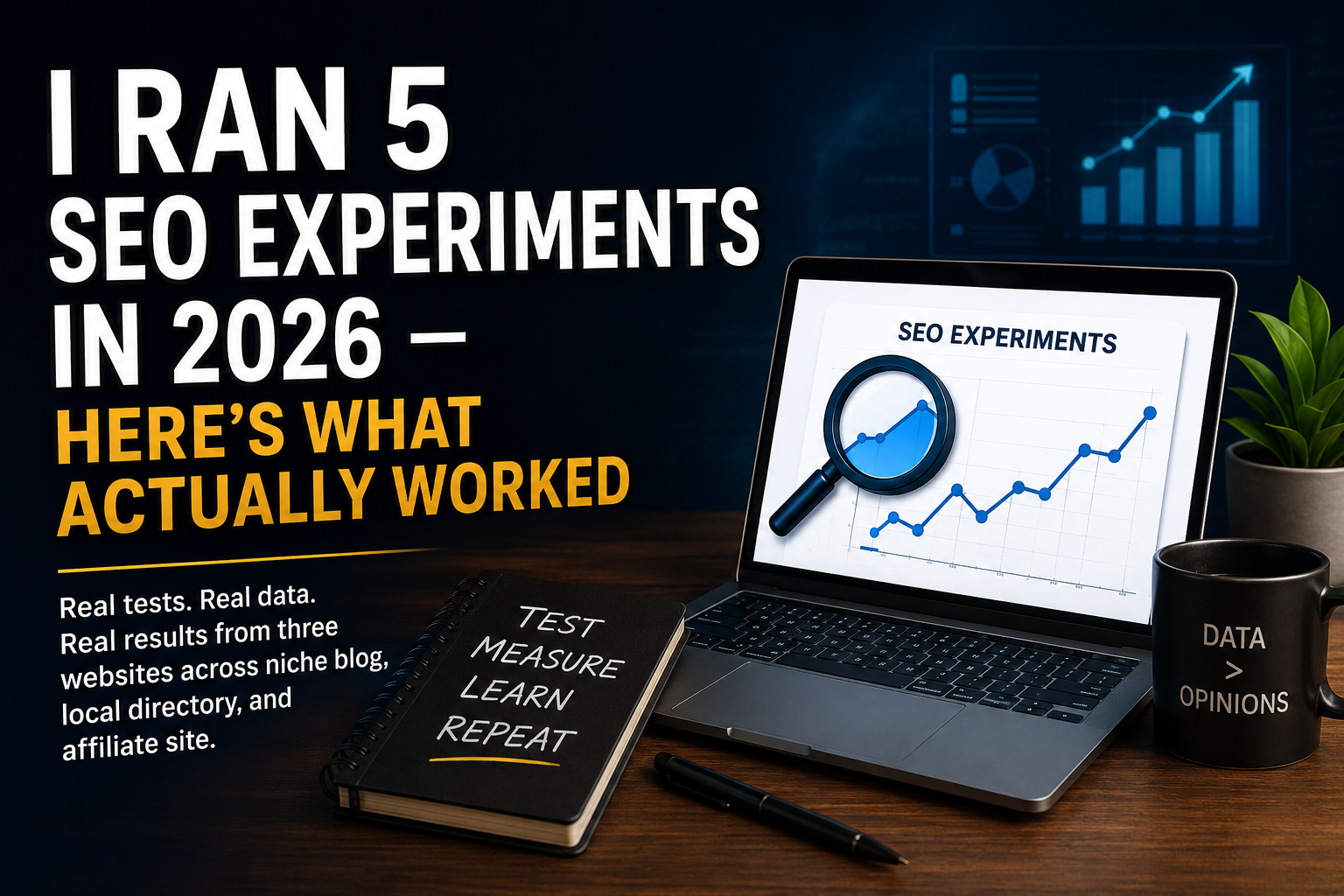
In early 2026, I stopped reading most SEO advice.
Not because it was wrong — but because everyone sounded certain while my own data showed chaos.
Pages with terrible UX were ranking. “Perfectly optimized” pages were dying. AI Overviews were destroying click-through rates overnight.
So instead of following best practices blindly, I started running experiments on my own sites — a niche blog, a local directory, and an affiliate site.
Some results surprised me. A few embarrassed me. Here’s the honest breakdown.
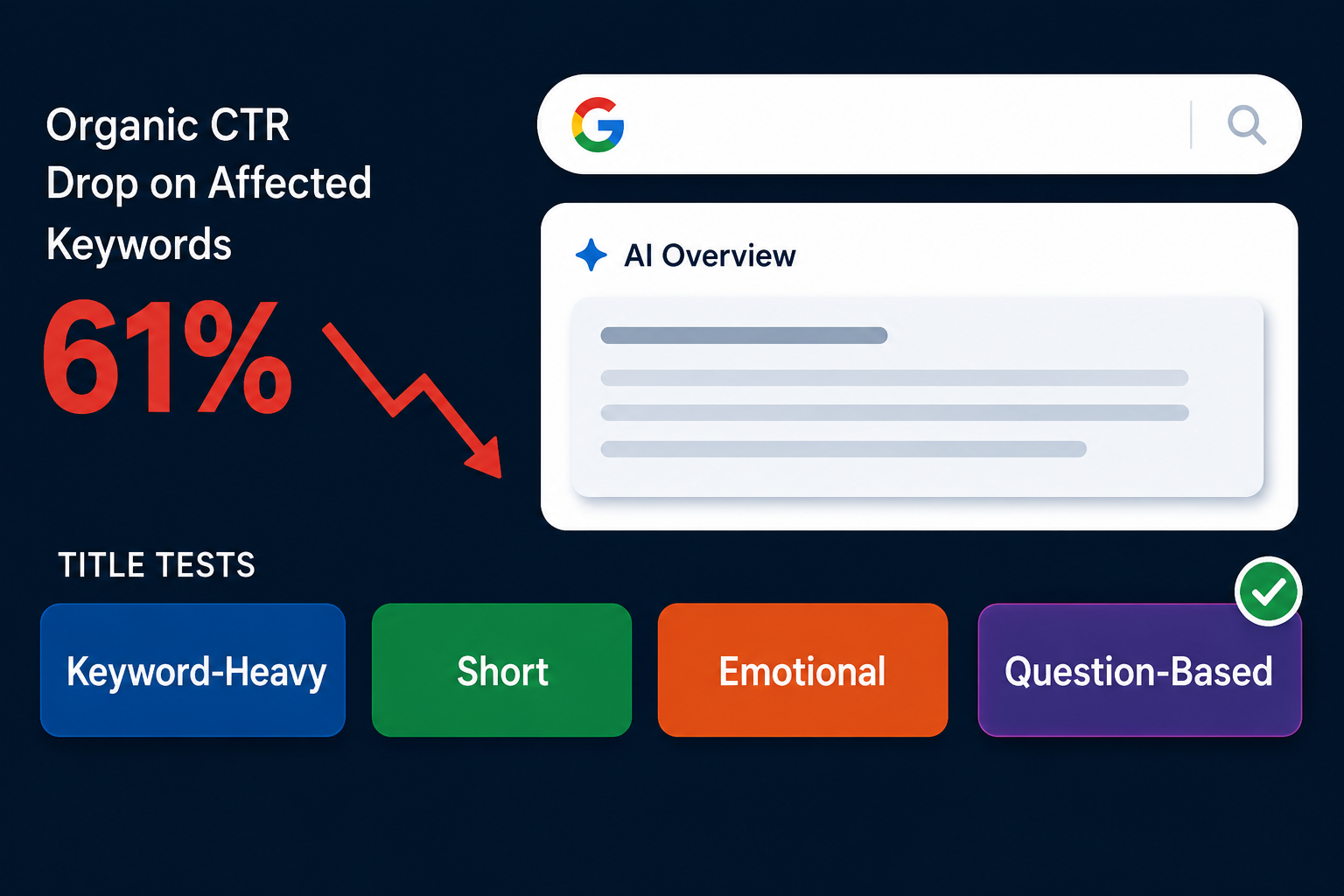
AI Overviews now appear in 13% of Google searches. Studies tracking over 5 million queries found organic CTR dropped 61% on affected keywords. My own impressions were climbing. My clicks were falling.
What I tested: Four title structures — keyword-heavy, short, emotional, and question-based. I also rewrote the first 100 words of 30 pages to sound more conversational.
What worked: Question-based titles performed best on informational pages. Conversational intros reduced bounce rates and improved time-on-page consistently.
What didn’t: Adding summary boxes to “appear in AI Overviews” had zero effect. Google decides who gets cited — no formatting trick changes that.
Takeaway: Stop trying to appear in AI Overviews. Focus on making your page worth clicking after one.
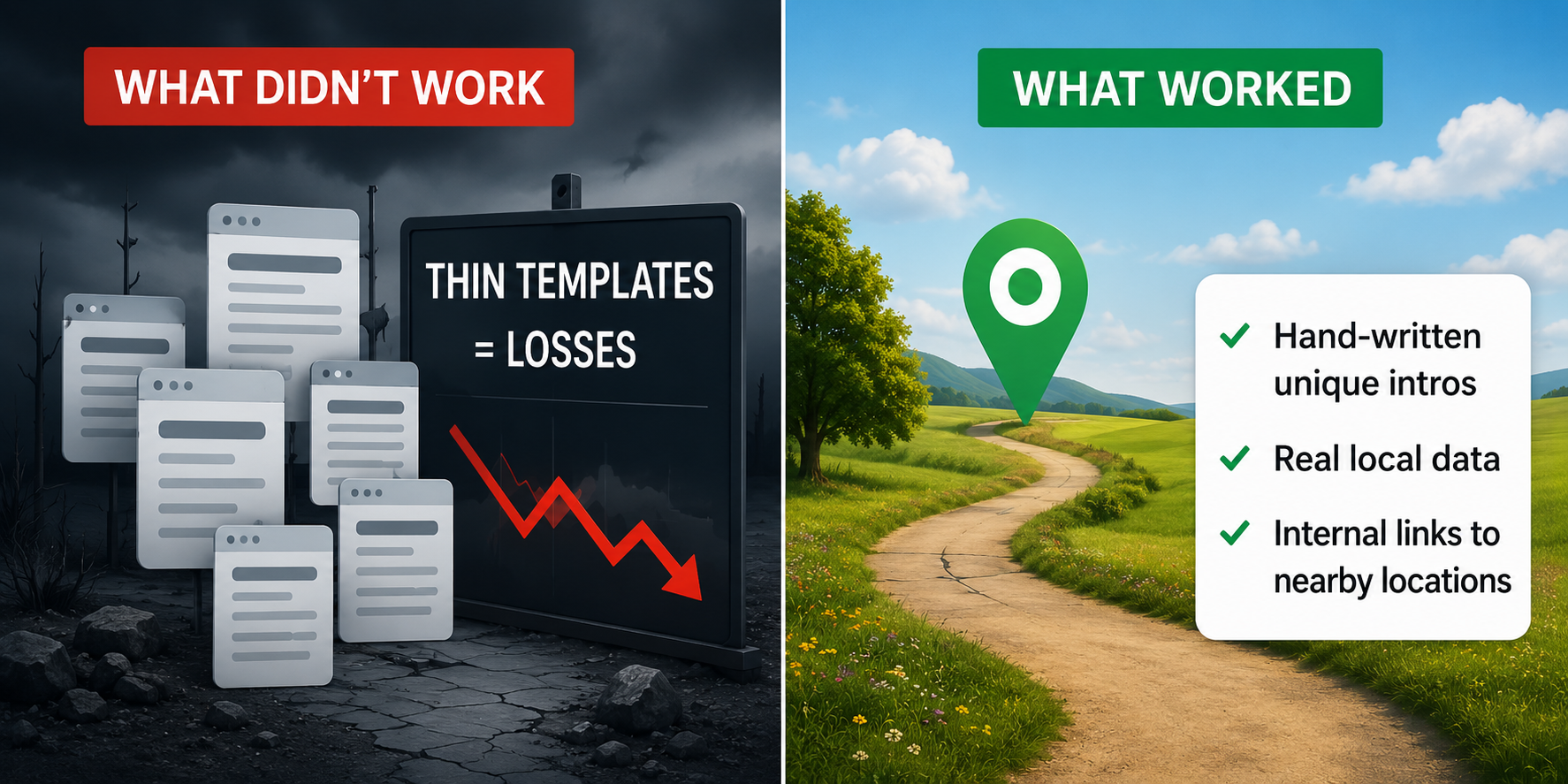
I built 800 template pages for my local directory site. City + service combinations, clean structure, dynamic data.
Google crawled fewer than 200 in the first three weeks. Then the March 2026 core update hit — explicitly targeting “scaled content abuse.” Pages with only the city name swapped in took heavy losses. Pages with real local data survived.
What finally worked:
Takeaway: The “volume at all costs” era of programmatic SEO is dead. Every page needs to answer a question no other page on your site already answers.
My affiliate site had 60–80 links per page — sidebars, footers, related post plugins everywhere.
I ran a two-week cleanup:
Result: Several pages stuck between positions 8–15 moved to page one within three weeks. Orphan pages I connected to relevant clusters started showing impressions within days.
Takeaway: Fewer, better, more intentional links beat scattering links everywhere. Body links are editorial signals. Footer links are just navigation.
I added author bios, real photos, LinkedIn links, and experience notes to 20 articles. Left 20 similar articles unchanged as a control.
Ranking impact was hard to isolate. But engagement was clear — lower bounce rates and longer sessions on articles with author signals.
Where it mattered most: YMYL-adjacent content (health, finance, purchase decisions). Google’s systems are more sensitive to author credibility on these topics.
What didn’t work: Inflated or vague bios. Google updated its Quality Rater Guidelines in January 2025 specifically to flag fake author profiles.
Takeaway: A genuine bio with real credentials and a LinkedIn link outperforms any generic “SEO expert” label every time.
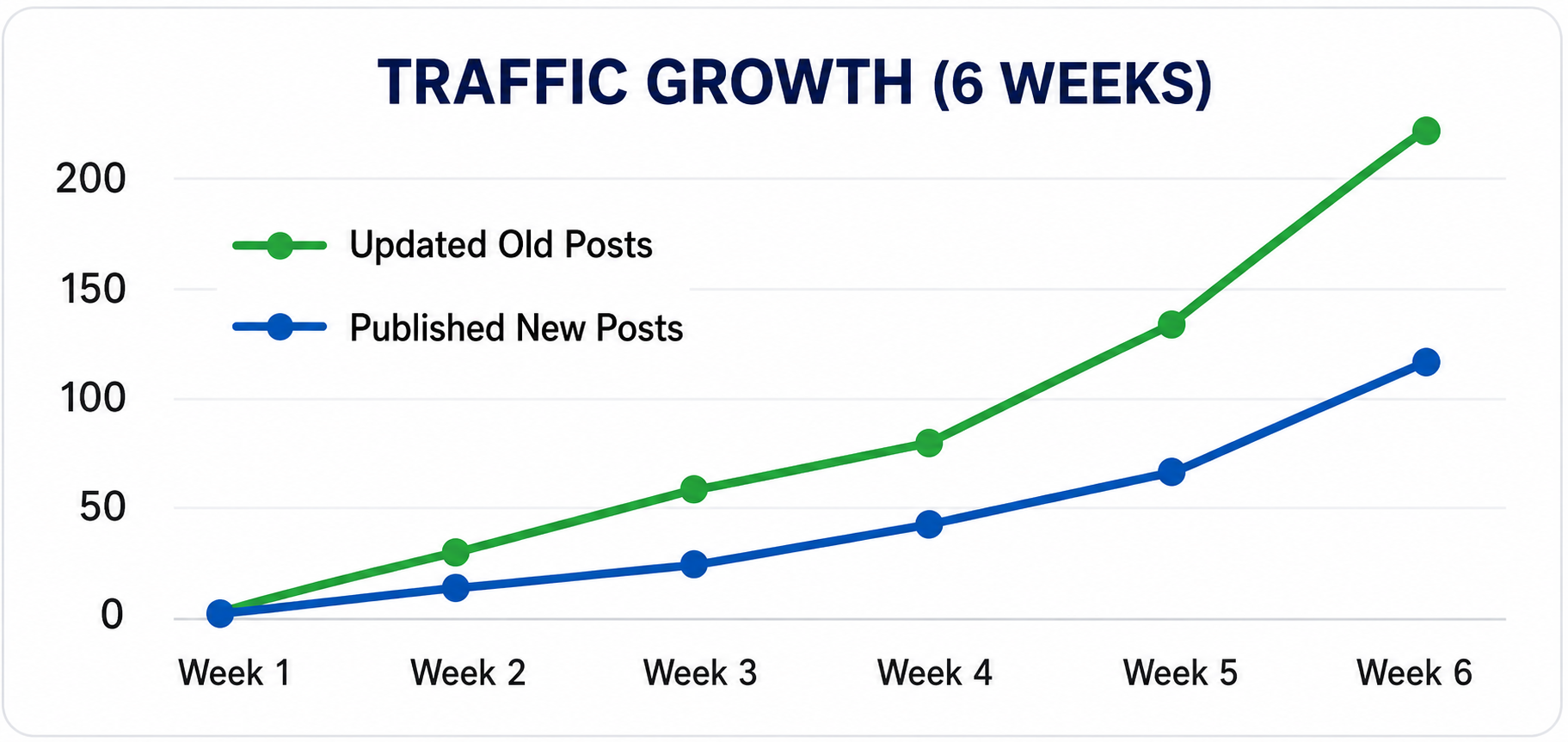
I paused new publishing for six weeks and updated 40 existing posts sitting on pages 2–3. Not just refreshing dates — I rewrote intros, added new data, improved internal links, and trimmed dead weight.
Result: Updating old articles drove more traffic growth in six weeks than three months of fresh publishing had done. Two posts jumped from positions 11–15 straight to page one.
Takeaway: If you have content close to page one, updating it will almost always outperform writing something new for the same keyword.
The SEOs who will survive 2026 are not the ones with the best frameworks. They are the ones willing to test, fail honestly, and adapt without ego.
Experiments were run across three personal websites. Results vary by niche, domain authority, and competitive landscape.