
Theuzora
Your Partner in Digital Growth
Theuzora
Your Partner in Digital Growth
Your Partner in Digital Growth
In 2026, I see affiliate SEO marketing as one of the most powerful ways to build a stable online income. I don’t rely only on ads or social media
I focus on Google search traffic because it gives me long-term, predictable results.
When I started affiliate marketing, I learned that success doesn’t come from just placing links. It comes from building trust, solving problems, and ranking content that matches real user intent.
I prefer SEO because:
Unlike paid ads, SEO keeps working even when I stop actively promoting content.
Let me be straight with you.
I spent months publishing affiliate content that got zero traffic. Not “low traffic” — zero. I was writing product reviews, dropping affiliate links, and telling myself the results would come. They didn’t.
Everything changed when I stopped chasing shortcuts and built a real strategy around SEO affiliate marketing. This post breaks down exactly what that strategy looks like in 2026 — no fluff, just what works.
Before the strategy, let’s clear something up. A lot of affiliate bloggers are still making these mistakes:
Google’s algorithms in 2026 are smart enough to filter all of this out. Sites without genuine first-hand expertise are being penalized at scale. The sooner you drop these habits, the faster things improve.
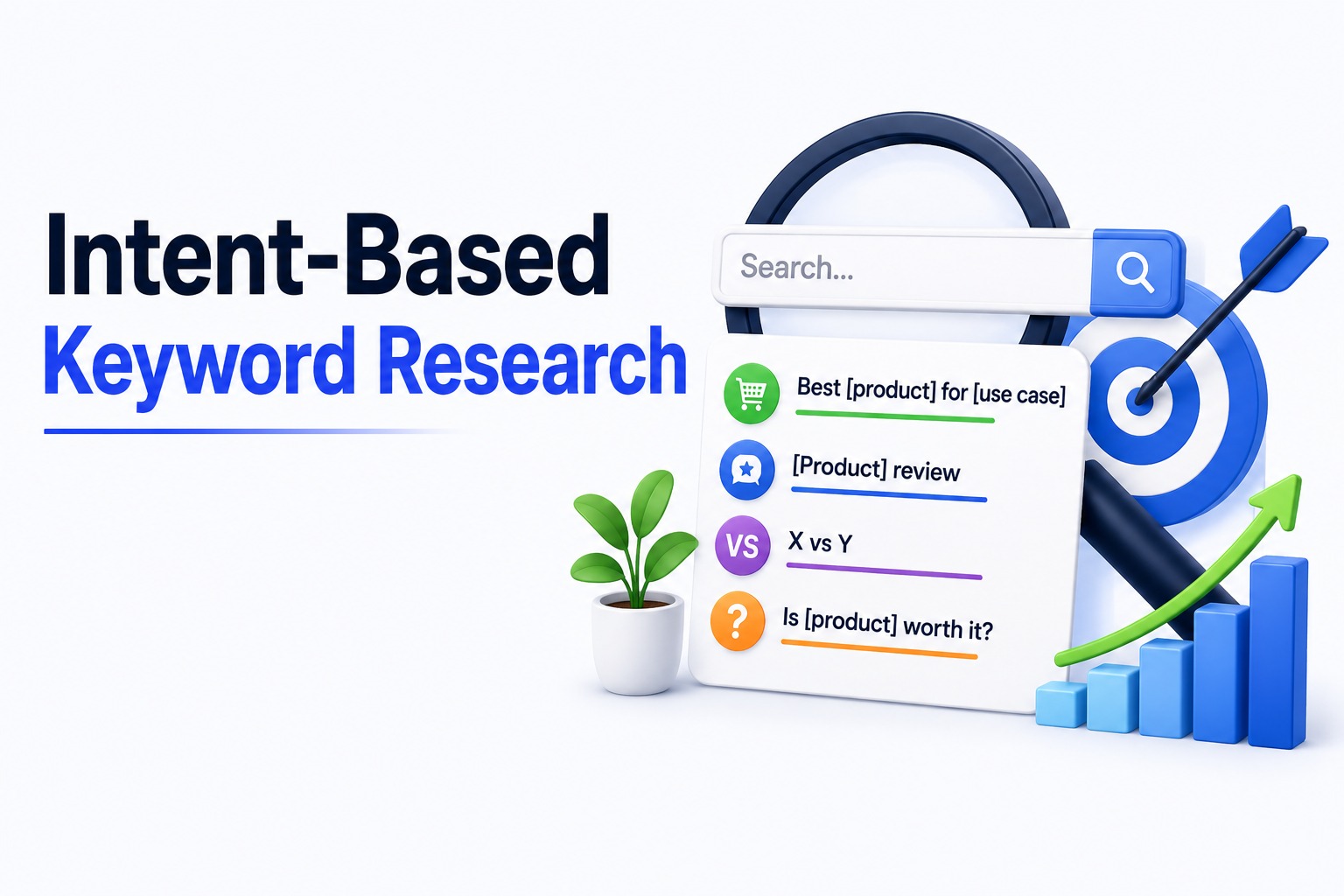
Not all keywords are equal. The ones that convert in affiliate SEO marketing are the ones where the reader is already in decision mode.
I focus on four keyword types:
I also target long-tail keywords heavily. “Best CRM for freelancers under $30” gets fewer searches than “best CRM” — but the person searching it is far closer to clicking your affiliate link. Less competition, higher conversion. That’s where beginners can actually win.
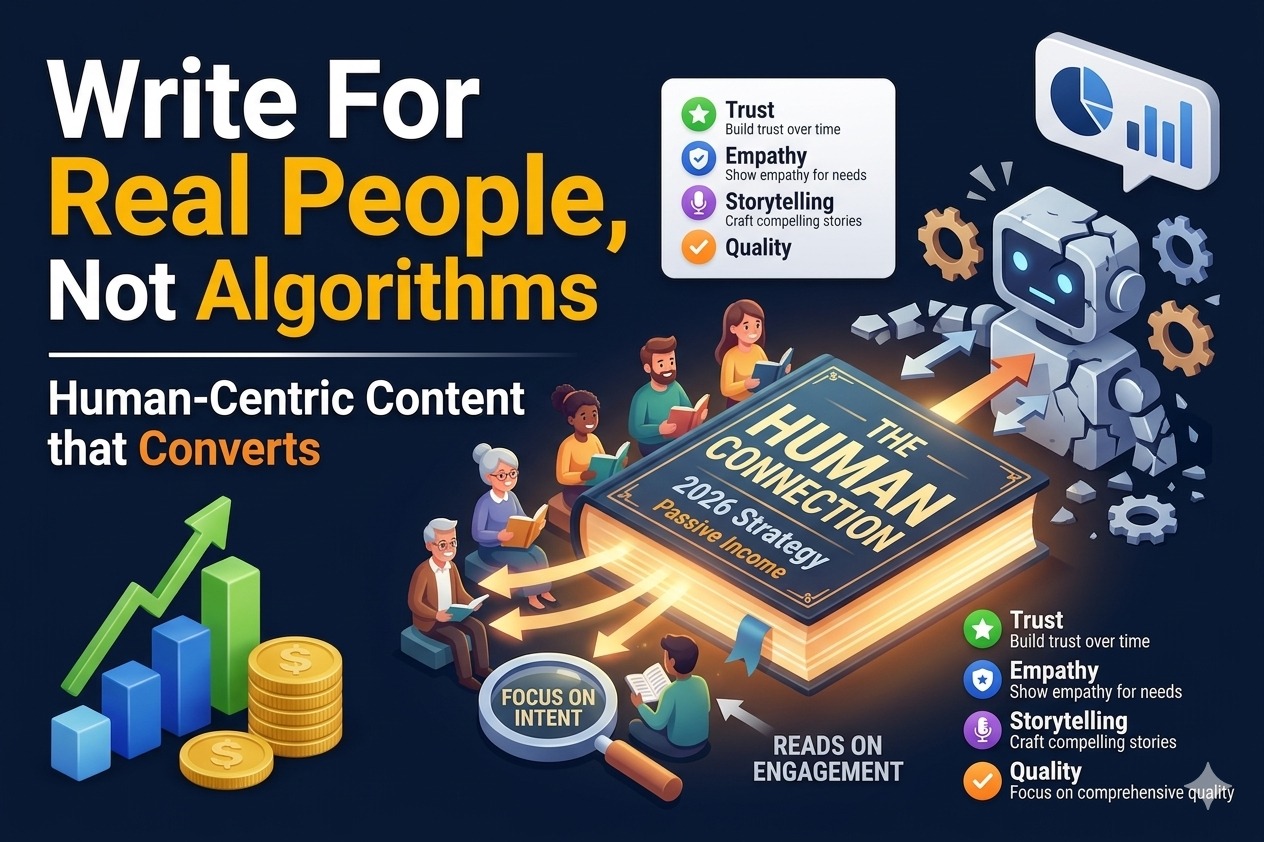
Here’s the mindset shift that changed my content completely: stop asking “how do I rank?” and start asking “how do I genuinely help?”
My content answers the questions people are actually thinking:
The affiliates winning in 2026 write like they’re giving advice to a friend – honest, direct, including the negatives. Readers can smell fake positivity instantly, and so can Google
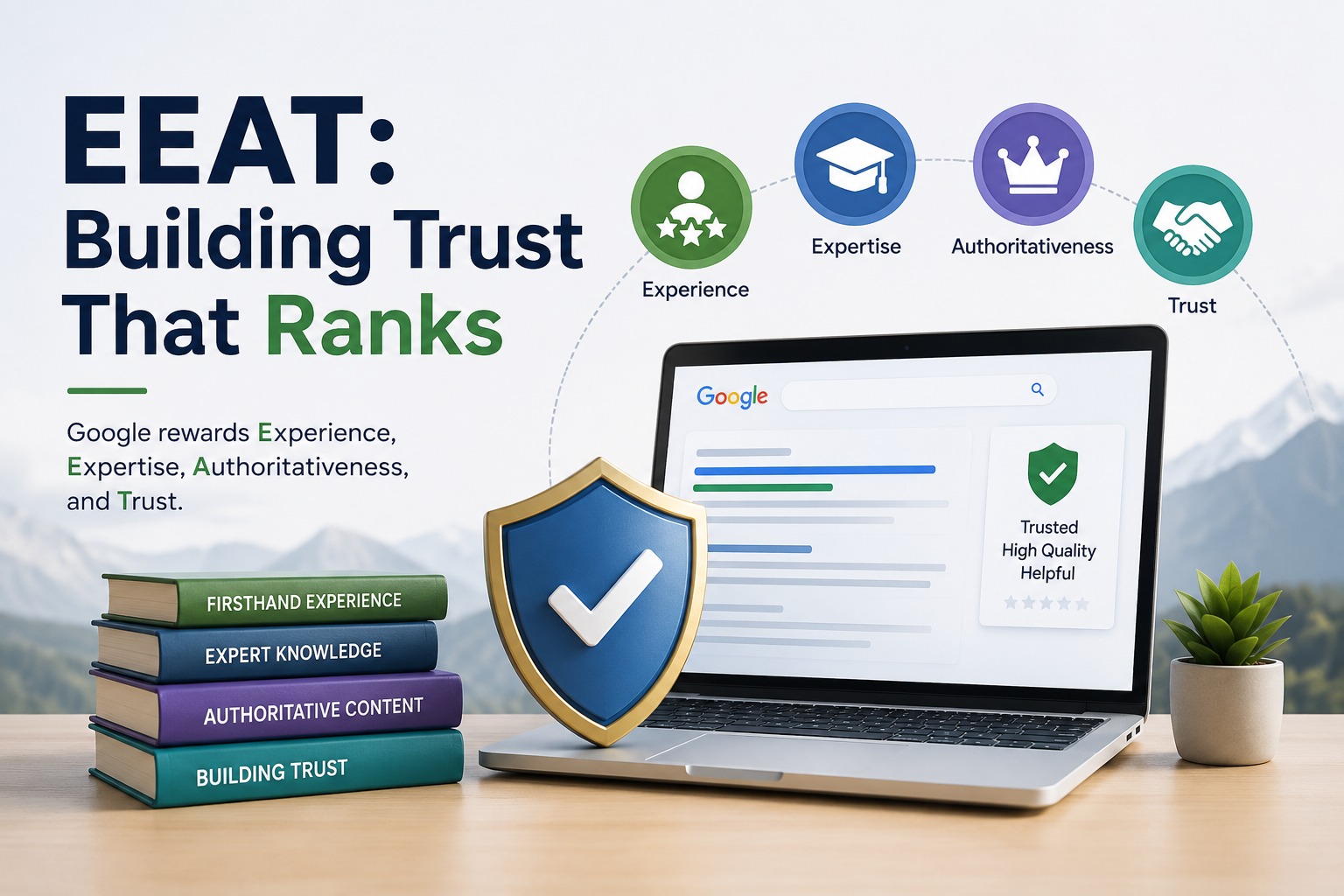
SEO and affiliate marketing in 2026 live and die by EEAT — Experience, Expertise, Authoritativeness, and Trustworthiness. Trustworthiness is the biggest one. It’s the conversion multiplier most people ignore.
Here’s how I build it practically:
One small thing that makes a real difference: add a proper author bio to every post explaining why you’re qualified to write about this topic. It signals credibility to both readers and Google.
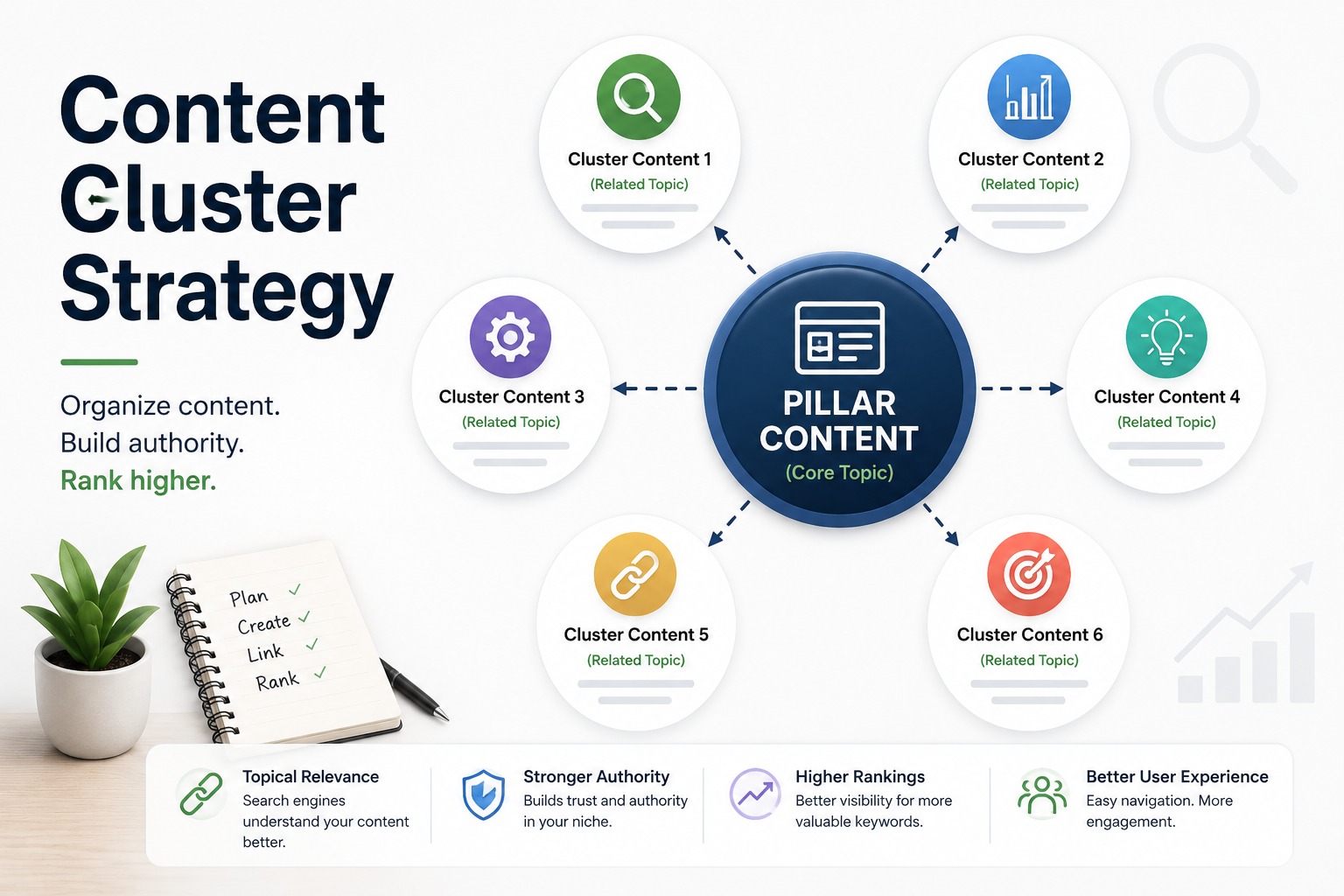
This is the single biggest change I made — and it drove the most growth.
Instead of publishing disconnected posts, I build content clusters:
Pillar Page — A comprehensive guide on the main topic. Example: “The Complete Guide to Email Marketing Tools in 2026.”
Supporting Posts — Focused articles that go deep on subtopics and link back to the pillar. Examples:
Strong Internal Linking — Every supporting post links to the pillar, and the pillar links back out. This creates a self-reinforcing network that tells Google your site is a genuine authority — not just a random blog with one article on the topic.
Search engines in 2026 reward depth over breadth. One focused niche with connected content beats ten scattered topics every single time.
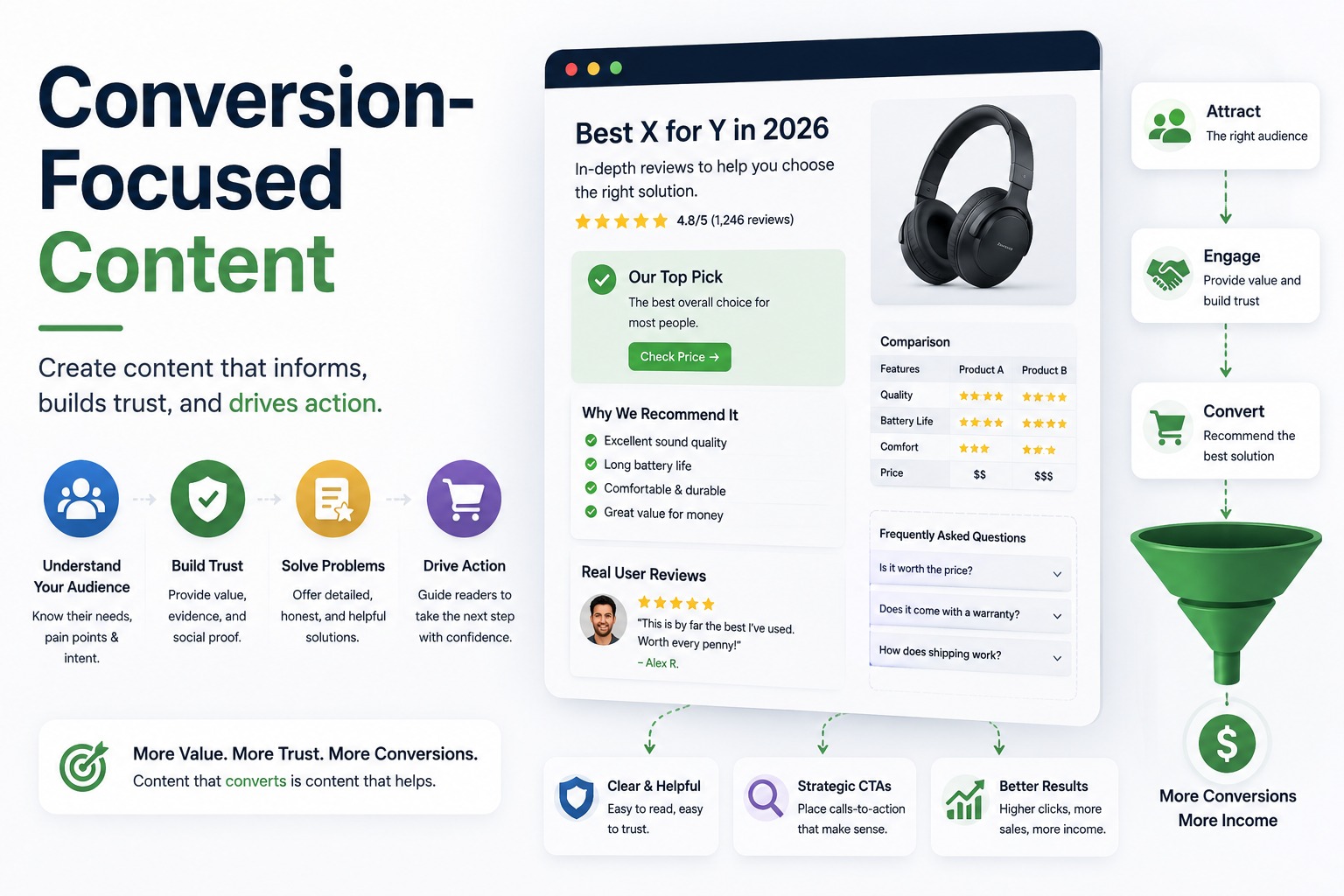
Ranking on page one means nothing if nobody clicks your affiliate links. Here’s how I optimize for actual sales, not just traffic:
Smart CTA placement — I place calls-to-action right after answering a key question, when the reader’s confidence is highest. Not everywhere. Just at the right moment.
Comparison tables — Scannable, visual, and conversion gold. They help readers decide faster and keep them on the page longer.
Natural link placement — 2 to 3 affiliate links per article, placed where they make sense. Overloading a post with links makes it look spammy and hurts both trust and rankings.
Handle objections — Before any CTA, I address the main reason someone might hesitate. “Yes, it’s expensive — here’s why it’s still worth it.” Removing doubt converts
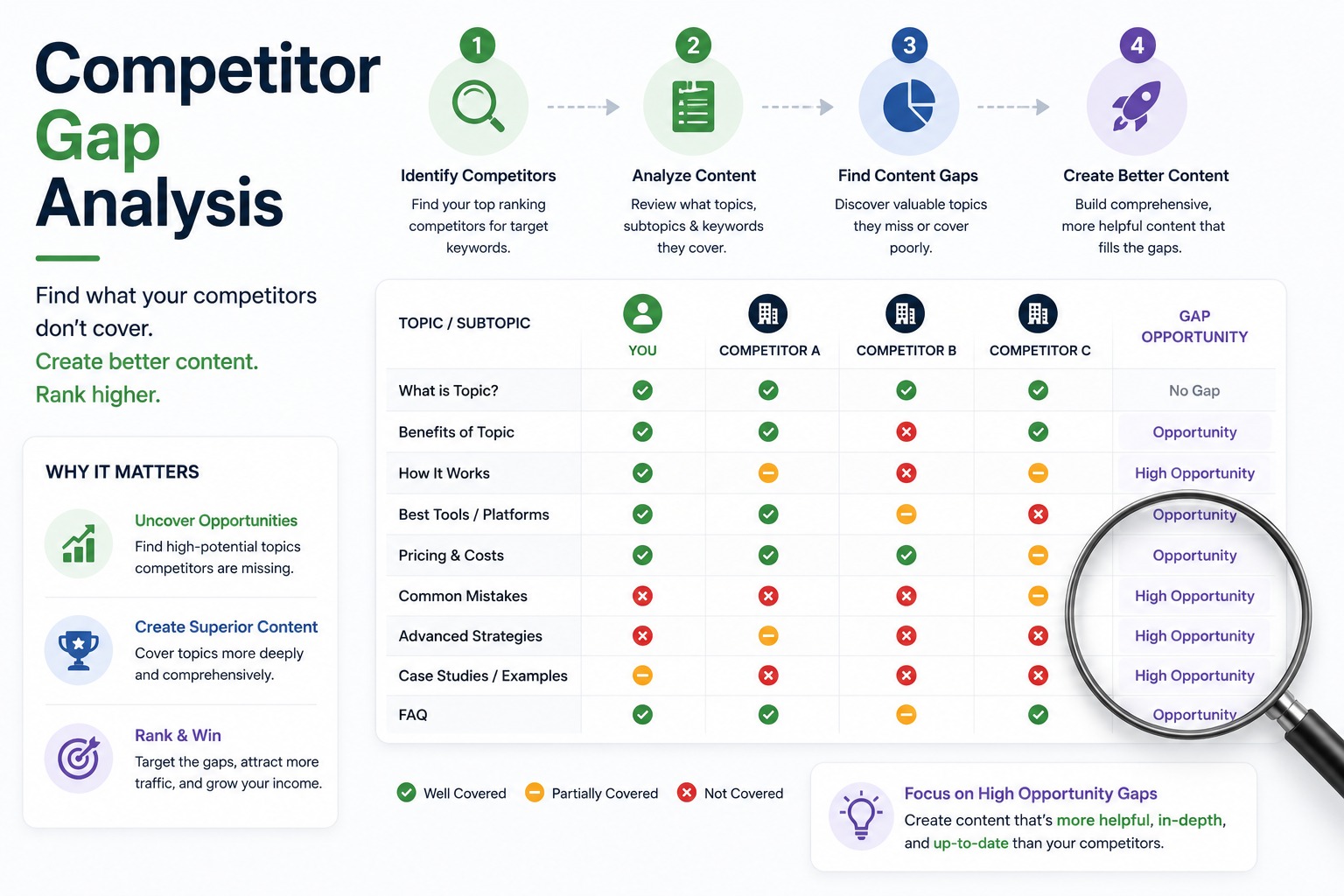
Before writing anything, I study the top 5 ranking pages for my target keyword. I ask three questions:
Then I write the article that fills those gaps. If you’re more helpful than what’s currently on page one, you have a legitimate shot at outranking it — even without a massive domain authority.
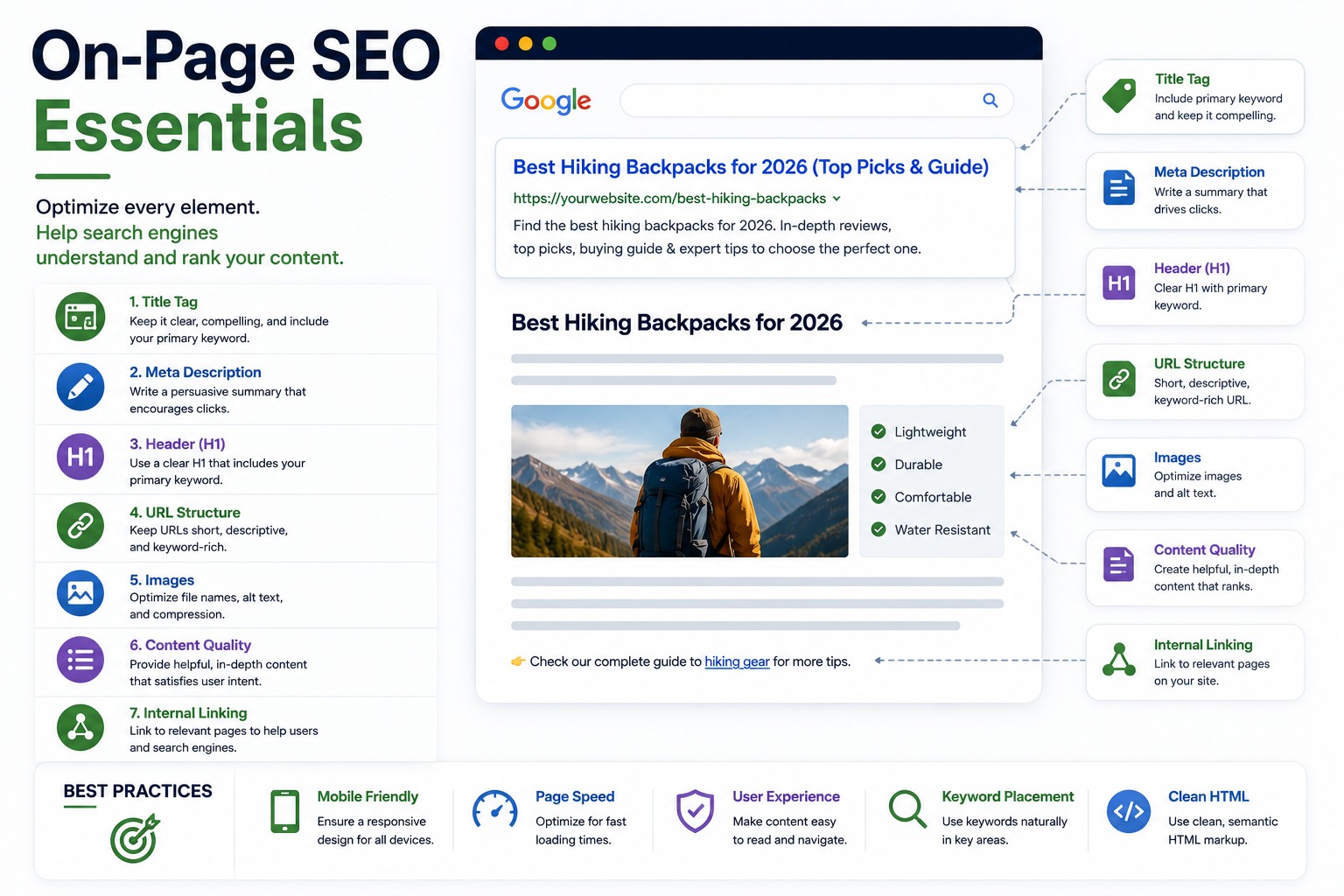
Every article I publish goes through this checklist:
None of this is complicated. But skipping half of it is exactly what most affiliate bloggers do.
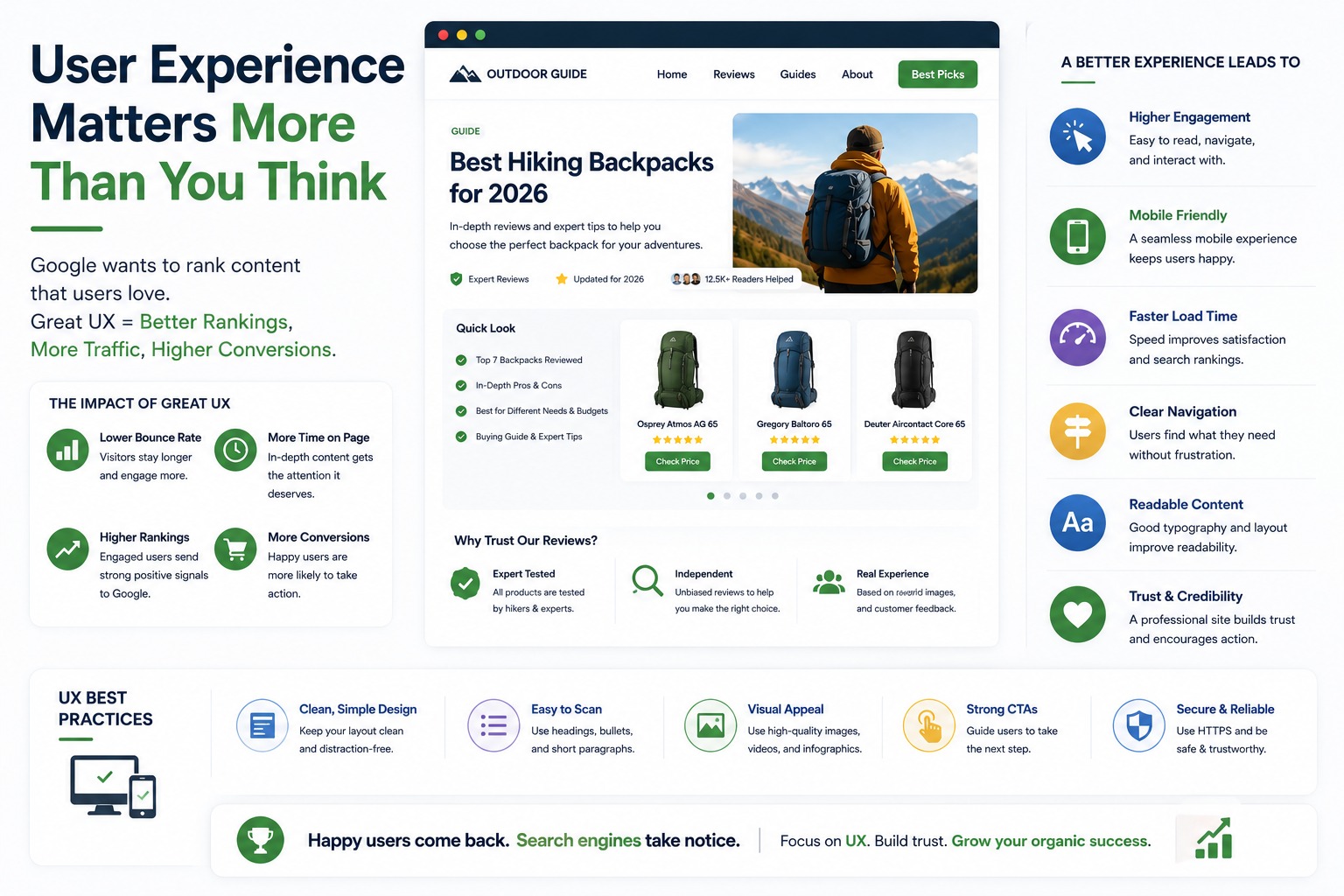
Fast-loading pages, mobile-friendly design, and clean formatting directly affect your rankings. Google uses mobile-first indexing — if your site looks broken on a phone, it ranks lower everywhere.
Beyond technical performance, readability matters:
A simple test: read your article out loud. If any sentence trips you up, rewrite it.
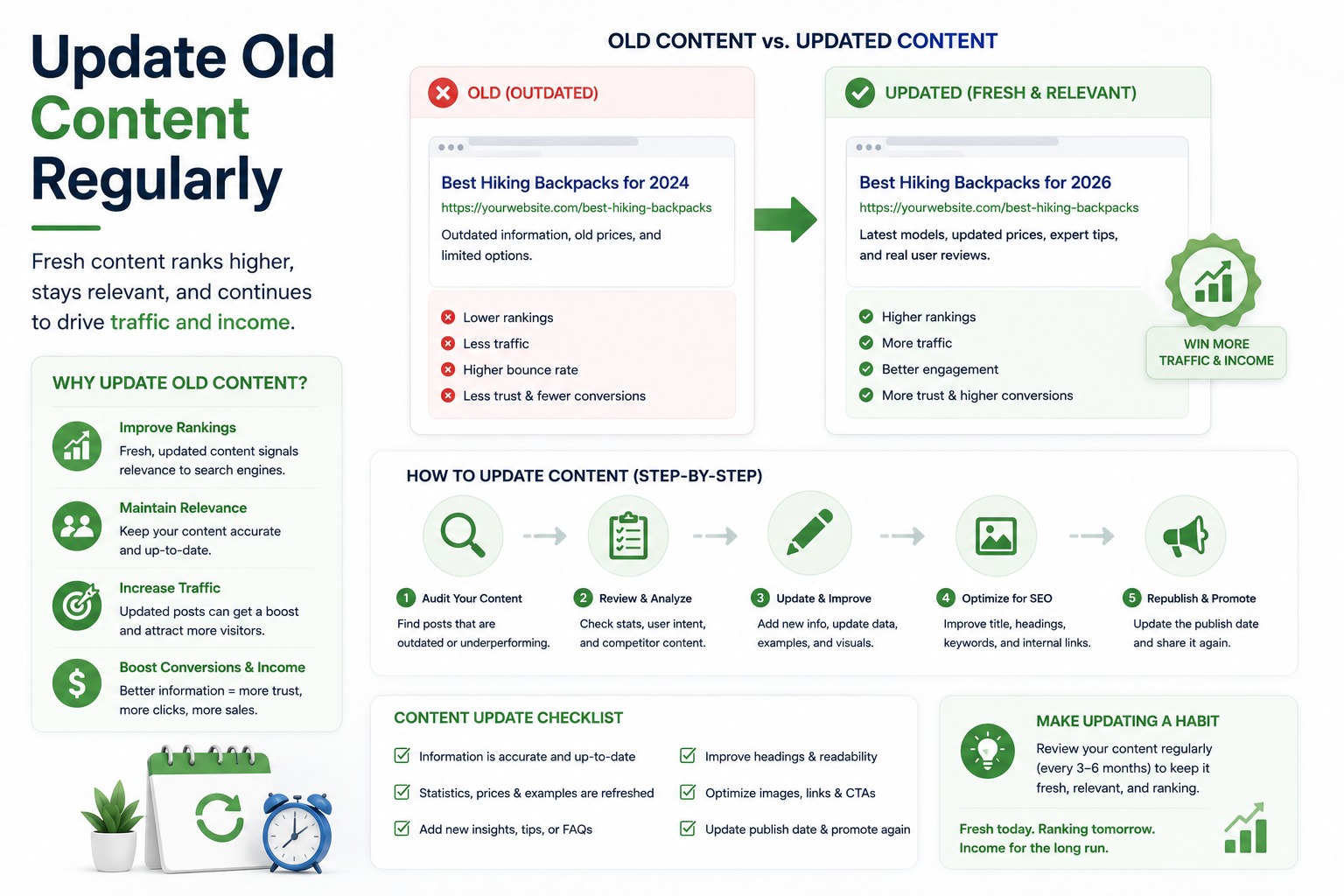
Most affiliates publish a post and never touch it again. That’s one of the biggest missed opportunities in affiliate SEO.
Every few months I go back through my top articles and:
Some of my biggest ranking jumps came from improving existing articles — not from writing new ones. Fresh, accurate content signals to Google that your site is actively maintained, and that matters.
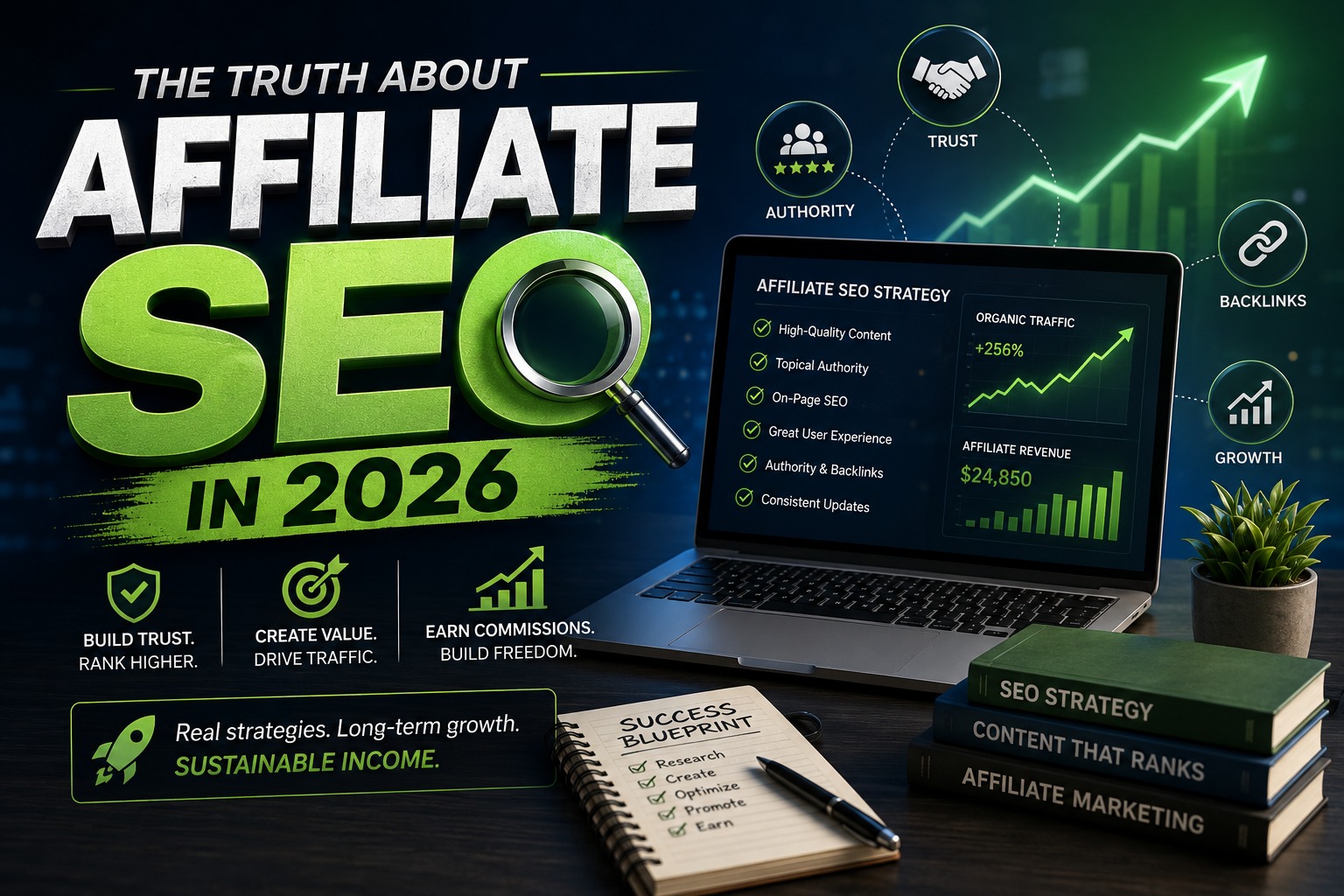
After everything I’ve tested and learned, here’s what I keep coming back to:
Affiliate SEO is not a quick-money strategy. It’s a trust-building business.
The content you optimize today can generate passive traffic and commissions for years — but only if it’s built on genuine value. Those who publish thin, low-effort content stay invisible. Those who consistently help readers make better decisions get rewarded by Google with traffic that compounds over time.
“Helping users better than your competitors do” — that’s the entire strategy, simplified.
If you get that part right, rankings follow. Traffic follows. And income follows the traffic.
Here are alternative high-quality resources for research:
If you found this helpful, feel free to share it or drop a comment. And if you’re just starting your affiliate SEO journey, just remember — it takes time, but every great piece of content you publish is an asset that works for you 24/7..